Payload, Speed and Jump Specifications for TITA Deployments
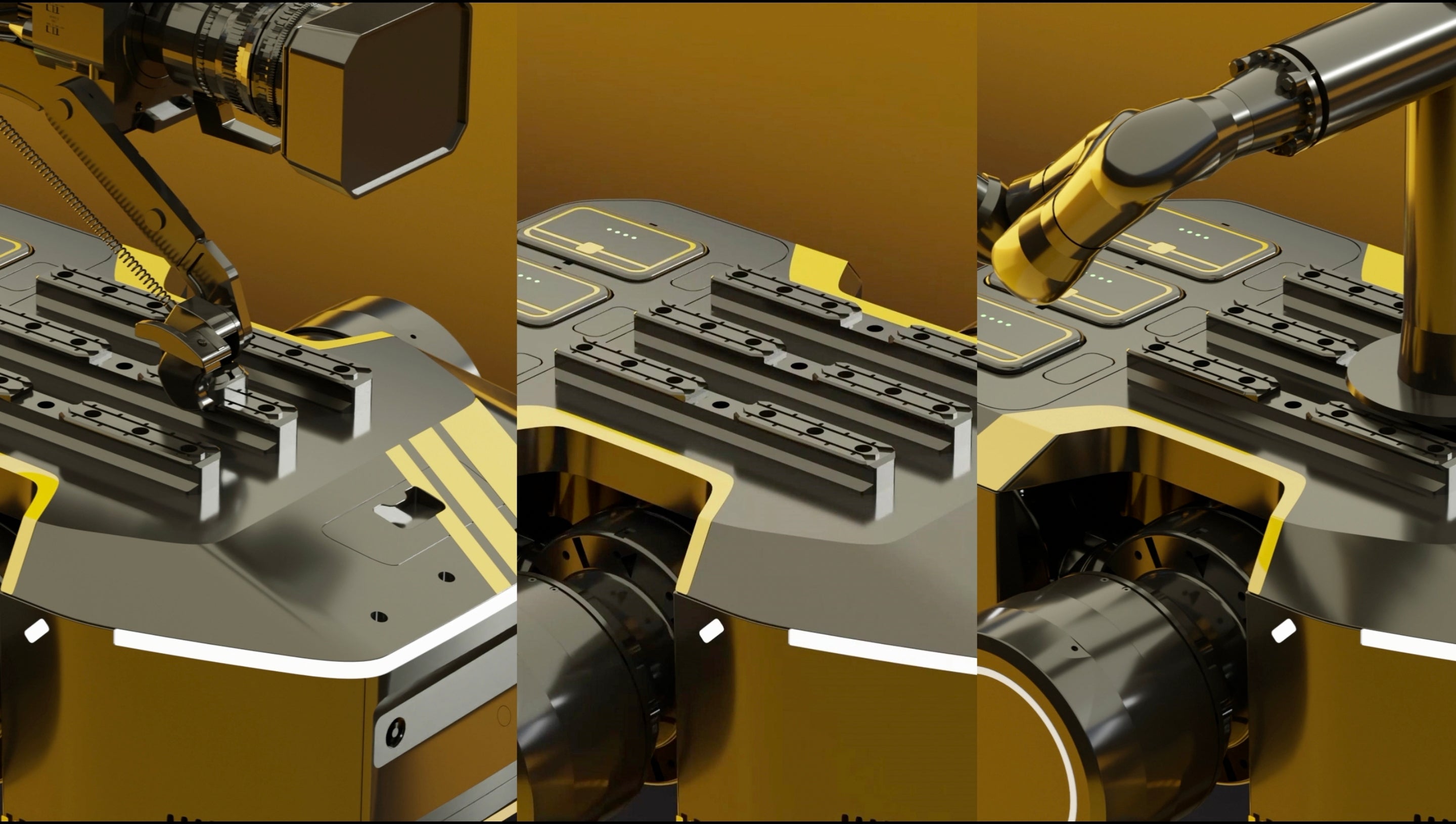
TITA deployments are defined by three measurable engineering parameters: payload capacity, movement speed, and jumping ability. Modern quadruped platforms typically support payloads ranging from 5 kg to more than 20 kg, walking speeds of 1–3 m/s, and obstacle clearance capabilities exceeding 20 cm depending on configuration. These specifications determine whether the robot can carry sensors, navigate complex terrain, and complete inspection tasks efficiently.
TITA platforms combine mechanical design, motor performance, and autonomous control to support inspection, mapping, and security applications where traditional wheeled robots have limited access.
Payload capacity determines how much equipment a TITA robot can carry during field operations. A practical deployment may include LiDAR sensors, thermal cameras, high-resolution optical cameras, microphones, communication modules, and edge-computing devices. The payload range depends on the robot structure, battery capacity, and actuator output.
| Payload Range | Typical Equipment | Application |
|---|---|---|
| 1–5 kg | Cameras, microphones, compact sensors | Indoor inspection |
| 5–15 kg | LiDAR, thermal imaging, computing units | Industrial inspection and mapping |
| 15 kg+ | Multi-sensor packages, robotic accessories | Advanced field operations |
A well-designed platform maintains stable walking performance while carrying additional equipment. For example, increasing payload from 5 kg to 15 kg can significantly change balance control requirements, requiring adjustments in joint torque and gait planning. Many modern quadruped robots use real-time control loops operating at 200–1000 Hz to adjust leg position and body posture during movement.
Payload capacity is not only about carrying weight; it also determines how many sensors and tools can be integrated into one deployment.
The ability to carry different sensor combinations allows TITA robots to support applications such as industrial inspection, infrastructure assessment, and autonomous mapping. A configuration based on a LiDAR sensor and visual camera system can create detailed environmental models, making a ROS 2 robot for inspection and mapping suitable for facilities that require regular monitoring and navigation.
Robot speed affects how quickly inspection areas can be covered. Quadruped platforms usually provide several movement modes, including slow walking for precise observation, normal walking for routine inspection, and faster locomotion for larger outdoor areas.
Typical speed specifications include:
| Movement Mode | Speed Range | Usage |
|---|---|---|
| Precision walking | 0.3–0.8 m/s | Sensor inspection |
| Normal walking | 1–1.5 m/s | Daily patrol routes |
| Fast movement | 2–3 m/s | Rapid area coverage |
Speed performance depends on actuator response, mechanical structure, and terrain recognition. A robot moving at 2 m/s can cover approximately 7,200 square meters per hour under suitable conditions, while maintaining sensor data collection. In 2024, advances in quadruped control systems improved terrain adaptation through machine learning methods that allow robots to adjust gait patterns according to surface changes.
Higher speed does not replace stable movement. Inspection robots need consistent positioning accuracy while collecting reliable sensor data.
For mapping tasks, movement speed must be balanced with data quality. A LiDAR-equipped robot moving too quickly may collect fewer environmental details, while slower movement improves mapping accuracy. Many autonomous systems therefore adjust speed according to location conditions, reducing velocity in narrow spaces and increasing speed in open areas.
Jumping capability expands the range of environments where TITA platforms can operate. Unlike wheeled robots, quadruped systems can use leg motion to cross small gaps, climb steps, and move over uneven ground. Jump performance depends on actuator power, body weight, and control algorithms.
Important jump specifications include:
| Parameter | Typical Measurement |
|---|---|
| Vertical clearance | 20–40 cm |
| Horizontal jump distance | 50 cm–1 m |
| Landing adjustment time | Less than 1 second |
| Control frequency | Hundreds of Hz |
During a jump, the robot must coordinate multiple joints within a short period. The legs generate upward force during take-off, maintain body orientation during flight, and absorb impact during landing. Research published between 2020 and 2025 on quadruped locomotion showed that improved reinforcement learning methods increased recovery performance after unexpected terrain changes.
Jumping functions are mainly used for terrain access and obstacle crossing rather than continuous movement.
The combination of payload, speed, and jumping performance creates different deployment options for various industries. Inspection environments such as factories, power facilities, warehouses, and construction sites require robots that can carry sensors while maintaining reliable movement.
A typical TITA deployment configuration may include:
-
RGB camera systems for visual inspection;
-
LiDAR sensors for 3D environment reconstruction;
-
thermal cameras for temperature monitoring;
-
wireless communication modules for remote operation;
-
onboard computers for AI-based analysis.
A robot equipped with multiple sensors may require additional processing capability. Modern edge computers can process several sensor streams simultaneously, with some systems handling more than 1 million LiDAR points per second while maintaining navigation performance.
Battery efficiency also affects payload and movement specifications. Additional sensors increase power consumption, while higher speeds require more motor output. Many field robots operate for 1–4 hours depending on battery capacity, terrain conditions, and equipment configuration.
A balanced configuration allows the robot to collect useful data without reducing operating time.
Software systems also influence deployment performance. ROS 2-based architectures are widely used in robotics because they support communication between sensors, navigation modules, and control systems. Since its release in 2017, ROS 2 has been adopted across research institutions and commercial robotics companies for applications requiring distributed communication and real-time control.
For mapping operations, software integration usually includes:
| Software Function | Purpose |
|---|---|
| SLAM | Build 3D maps while moving |
| Navigation | Plan routes and avoid obstacles |
| Sensor fusion | Combine camera, LiDAR, and IMU data |
| Remote control | Manage field missions |
The TITA platform provides hardware capabilities that support these software functions.
Field deployment requires testing under different environmental conditions. Outdoor inspections may involve slopes, gravel surfaces, uneven floors, and narrow passages. In these situations, the robot’s ability to adjust gait, maintain balance, and continue collecting data determines operational reliability.
Between 2021 and 2025, quadruped robots were increasingly evaluated for industrial inspection scenarios because they can access locations that are difficult for wheeled platforms. Studies involving autonomous legged robots have shown improved navigation performance after combining visual perception, LiDAR mapping, and machine learning-based control methods.
TITA deployments rely on the interaction between mechanical specifications and software capability to complete inspection and mapping tasks across different environments.
Future improvements will focus on lighter materials, longer battery operation, stronger computing systems, and more accurate autonomous navigation. As sensor technology develops, robots with higher payload capacity and improved mobility will support more complex inspection requirements while reducing the need for manual operation in difficult locations.